
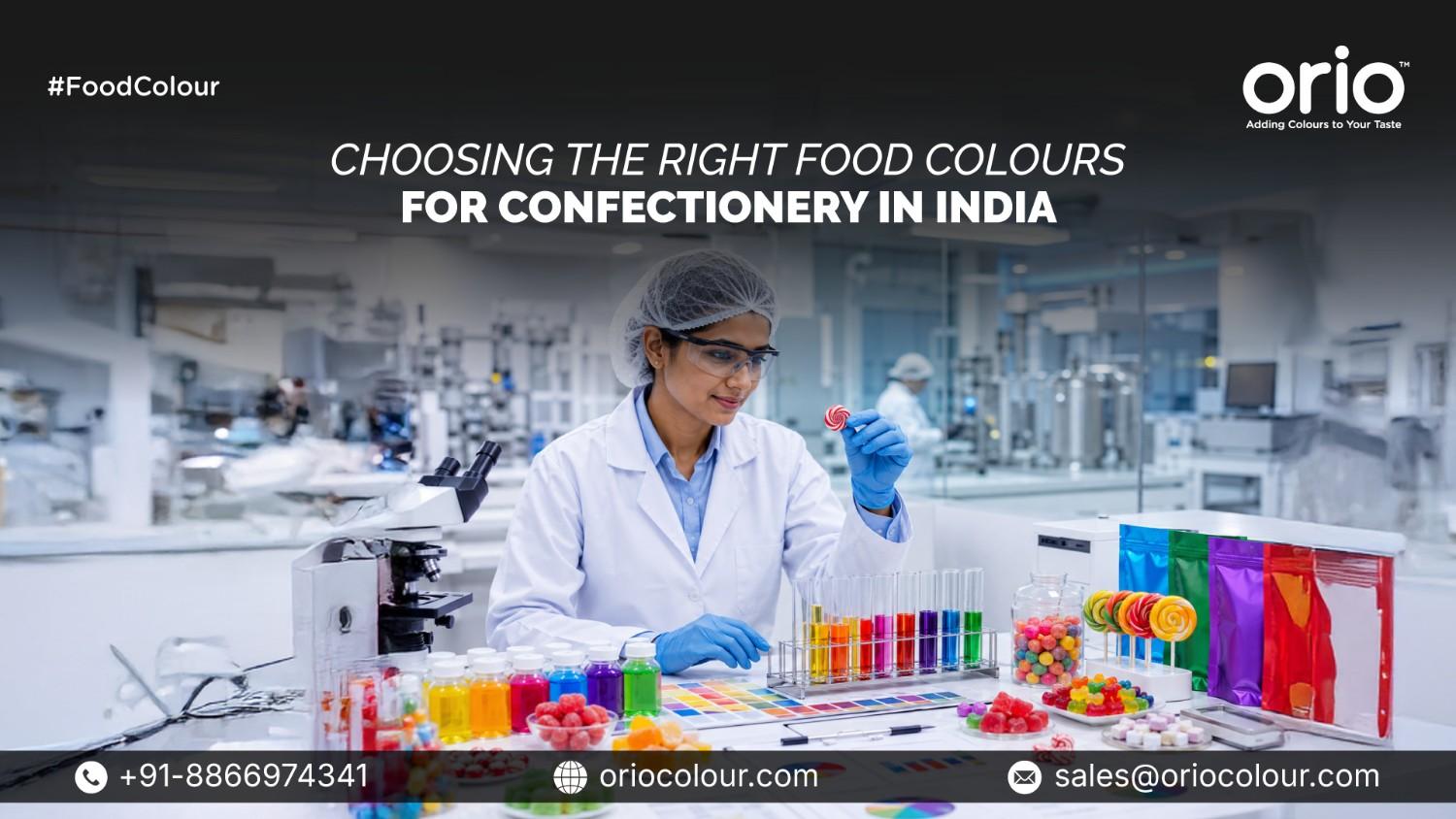
Choosing the right food colours for confectionery in India requires careful consideration of shade consistency, colour stability, regulatory compliance, and application performance. High-quality food colours help confectionery manufacturers create visually appealing products while ensuring consistent appearance, processing stability, and consumer acceptance across candies, gummies, jellies, and other confectionery products.
The confectionery industry is built on visual appeal. Before consumers experience the flavour of a candy, gummy, jelly, lollipop, or coated confection, they notice its colour. Vibrant, consistent, and attractive shades help products stand out on crowded retail shelves while reinforcing brand identity.
However, selecting colours for confectionery is not simply about choosing the brightest shade. Manufacturers must consider stability, compliance, application requirements, and consumer expectations. Understanding how to choose food colours for confectionery can help brands create products that are visually appealing, safe, and commercially successful.
What Food Colours Are Used in Confectionery?
One of the most common questions manufacturers ask is what food colours are used in confectionery.
The confectionery sector typically uses a combination of:
Synthetic Food Colours:
Synthetic food colours are widely used due to their:
- High colour strength
- Excellent brightness
- Consistent performance
- Cost efficiency
- Stability during processing
They are commonly found in candies, gummies, hard-boiled sweets, jellies, and coated confectionery products.
Blended Colours:
Blended food colours help manufacturers achieve unique and customised shades that support product differentiation and brand recognition.
Lake Colours:
Lake colours are often selected for applications requiring better performance in low-moisture or fat-based systems.
Natural Colours:
Natural food colour solutions are increasingly being explored by manufacturers responding to evolving consumer preferences and clean-label product strategies.
Choosing the right option depends on product formulation, processing conditions, target markets, and desired visual impact.
How to Choose Food Colours for Confectionery
When evaluating food colours for confectionery, manufacturers should consider several important factors.
Regulatory Compliance:
Colours must comply with relevant food safety regulations for the intended market.
A reliable confectionery food colour supplier should provide products supported by recognised quality and compliance standards, including:
- FDA compliance where applicable
- FSSAI requirements
- ISO 22000-certified systems
- GMP practices
- Halal and Kosher certifications
Compliance helps support product quality, market access, and consumer confidence.
Colour Stability:
Understanding how to select stable confectionery food colours is essential for maintaining product appearance throughout production and shelf life.
Colours used in confectionery may be exposed to:
- Heat during processing
- Moisture variations
- Light exposure
- Extended storage conditions
Poor colour stability can lead to fading, shade variation, or inconsistent product appearance.
Product Application:
Different confectionery products require different colour solutions.
For example:
- Hard candies may require colours with excellent heat stability.
- Gummies and jellies often need colours that disperse evenly throughout the formulation.
- Sugar-coated confectionery may require specific colour systems to achieve uniform coverage.
- Decorative applications often demand highly vibrant shades with strong visual impact.
Selecting colours based on application requirements helps ensure optimal performance.
Which Food Colours Are Safe for Confectionery Products?
Manufacturers often ask which food colours are safe for confectionery products.
Safety depends on selecting colours that meet applicable regulatory requirements and are sourced from reputable manufacturers with robust quality control systems.
When evaluating colour suppliers, manufacturers should look for:
- Documented quality standards
- Consistent batch-to-batch performance
- Regulatory support
- Traceability systems
- Product testing and validation processes
Working with an experienced confectionery food colour manufacturer India can help simplify compliance and quality assurance requirements.
The Growing Demand for Custom Colour Solutions
Today's confectionery brands are increasingly seeking distinctive visual identities.
This has created growing demand for custom confectionery colour solutions that help products stand apart in competitive markets.
Customised shades can support:
- Seasonal product launches
- Brand-specific colour requirements
- Limited-edition product ranges
- Regional market preferences
- Premium product positioning
A trusted confectionery food colour supplier can work closely with manufacturers to develop tailored colour solutions that align with both technical and branding objectives.
Choosing a Reliable Confectionery Food Colour Partner
The success of confectionery products depends on more than colour selection alone. Manufacturers need a supplier that understands formulation challenges, quality requirements, and evolving market trends.
When sourcing confectionery food colours India, consider a partner that offers:
- Extensive product portfolio
- Custom shade development
- Regulatory expertise
- Consistent quality standards
- Technical support
- Reliable supply capabilities
These factors contribute to smoother product development and long-term manufacturing success.
Conclusion
Choosing the right colour solution requires balancing aesthetics, compliance, stability, and product performance. Whether developing vibrant food colours for candy, gummies, jellies, or premium confectionery products, manufacturers benefit from selecting colours designed for their specific application requirements.
At Orio Colours, we provide innovative and reliable food colours for confectionery, combining quality, compliance, and customisation expertise to help brands create products that deliver visual appeal and consistency. With custom shade development and internationally recognised quality standards, we remain committed to delivering excellence in every shade.
FAQs
Why is choosing the right food colour important for confectionery manufacturing?
The right colour enhances product appeal, supports brand recognition, improves visual consistency, and helps products stand out in competitive markets.
What should check before selecting confectionery food colours?
Manufacturers should evaluate regulatory compliance, colour stability, application suitability, supplier quality standards, and batch-to-batch consistency before selecting colours.
Why do confectionery manufacturers choose Orio Colours?
Orio Colours offers customised shade solutions, technical expertise, quality-focused manufacturing, international certifications, and reliable support for confectionery applications.
Why is colour consistency important for confectionery brands?
Consistent colour helps maintain brand identity, strengthens consumer trust, and ensures that products look the same across multiple production batches and market locations.
Which confectionery products commonly use food colours?
Food colours are commonly used in candies, gummies, jellies, hard-boiled sweets, chewing gums, confectionery coatings, and decorative confectionery products.