
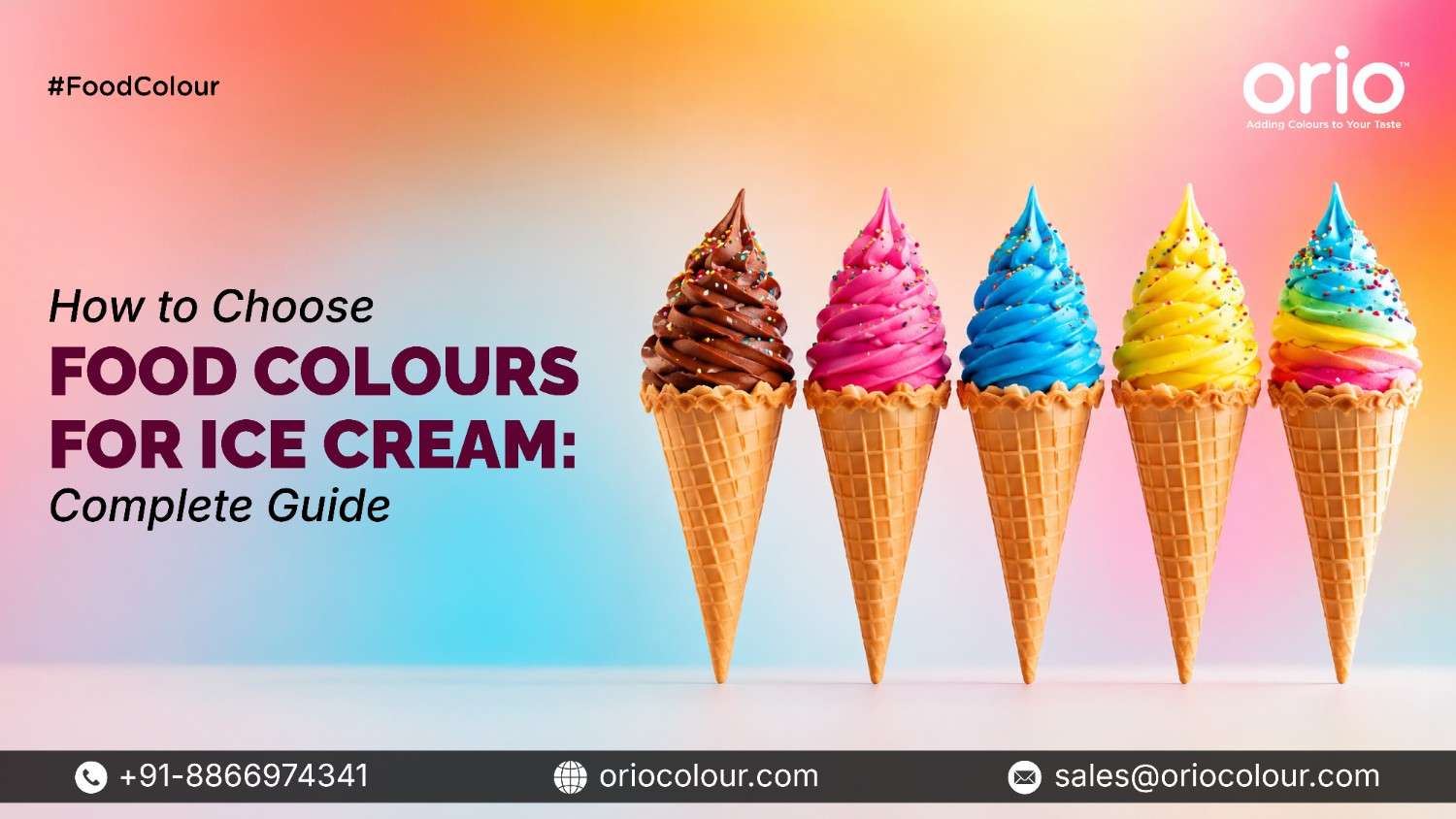
In the ice cream industry, appearance influences consumer expectations long before the first spoonful. Whether it is classic vanilla, a vibrant mango scoop, a berry swirl, or a premium pistachio flavour, colour helps communicate flavour, quality, and brand identity.
For manufacturers, selecting the right food colours for ice cream is not simply a visual decision. The chosen colour must perform consistently throughout production, freezing, storage, and distribution. This guide explores the key factors manufacturers should consider when choosing colour solutions for ice cream products.
Why Food Colours Matter in Ice Cream Production
Consumers often associate specific colours with particular flavours. A mismatch between flavour and appearance can affect product perception and purchasing decisions.
The right food colours for ice cream help manufacturers:
- Create strong visual appeal
- Enhance flavour recognition
- Maintain brand consistency
- Differentiate product ranges
- Improve shelf presence in retail freezers
As consumer expectations evolve, colour has become an important part of product development and brand positioning.
How to Choose Food Colours for Ice Cream
Understanding how to choose food colours for ice cream requires balancing aesthetics, stability, compliance, and formulation requirements.
Consider the Product Formulation:
Ice cream formulations vary significantly depending on ingredients and processing methods.
Manufacturers should evaluate:
- Fat content
- Dairy or non-dairy formulations
- Sugar levels
- Fruit inclusions
- Flavour ingredients
- Processing conditions
Colours must remain stable and visually appealing within the specific formulation.
Focus on Colour Stability:
Ice cream products undergo freezing, storage, transportation, and repeated temperature fluctuations throughout their lifecycle.
A suitable ice cream food colouring solution should offer:
- Freeze-thaw stability
- Resistance to colour fading
- Uniform appearance throughout storage
- Consistent performance across production batches
Stable colour performance helps maintain product quality and consumer confidence.
Match Colour with Consumer Expectations:
Colour plays a critical role in flavour perception.
For example:
- Strawberry products are expected to display pink or red shades.
- Mango ice cream often requires vibrant yellow-orange tones.
- Pistachio varieties commonly feature green hues.
- Chocolate products typically rely on rich brown shades.
Selecting colours that align with flavour expectations improves consumer acceptance and brand recognition.
Best Food Colours for Ice Cream Applications
The best food colours for ice cream depend on the product's formulation, desired appearance, and target market.
Synthetic Food Colours:
Synthetic food colours for ice cream remain widely used due to their:
- High colour strength
- Excellent consistency
- Wide shade range
- Cost efficiency
- Reliable performance during manufacturing
These colours are particularly suitable for vibrant and uniform applications where colour precision is essential.
Natural Colour Solutions:
Manufacturers responding to clean-label trends may explore natural food colour alternatives for selected product categories.
The suitability of natural colours depends on formulation requirements, flavour profile, processing conditions, and target market expectations.
Custom Shade Development:
Many brands seek unique visual identities that help distinguish their products in competitive retail environments.
Custom colour development allows manufacturers to create signature shades tailored to specific product ranges and branding requirements.
Selecting a Reliable Colour Partner:
Choosing the right food colour supplier is as important as selecting the colour itself.
When evaluating Ice Cream food colours solutions, manufacturers should consider:
- Product quality standards
- Regulatory compliance support
- Batch-to-batch consistency
- Technical expertise
- Custom shade capabilities
- Reliable supply chain management
An experienced food colour manufacturer India can provide valuable guidance throughout product development and commercial production.
Compliance and Quality Considerations:
Food colours used in ice cream should comply with applicable regulatory and quality requirements.
Manufacturers should work with suppliers that support recognised standards such as:
- FSSAI requirements
- FDA regulations where applicable
- ISO 22000-certified quality systems
- GMP practices
- Halal and Kosher certifications
These standards help support product quality, safety, and market acceptance across different regions.
Conclusion
Choosing the right colour solution involves more than selecting an attractive shade. Manufacturers must consider formulation compatibility, stability, compliance, and consumer expectations to achieve consistent product performance.
By following a structured ice cream food colour selection guide, brands can develop visually appealing products that strengthen flavour perception and enhance market appeal.
At Orio Colours, we deliver specialised food colours for ice cream, combining quality, compliance, and custom shade expertise to help manufacturers create products that stand out. Guided by our commitment to Excellence in Every Shade, we provide reliable colour solutions tailored to the evolving needs of the food industry.
FAQs
Q: Which food colours are commonly used in ice cream?
A: Ice cream manufacturers commonly use synthetic colours, blended colours, natural colours, and customised shade solutions depending on product formulation, flavour profile, and market requirements.
Q: How do manufacturers choose the right food colour for ice cream?
A: Manufacturers evaluate formulation compatibility, colour stability, flavour alignment, regulatory compliance, and supplier expertise before selecting a colour solution.
Q: Why are food colours important in ice cream production?
A: Food colours improve visual appeal, support flavour recognition, strengthen brand identity, and help products attract consumer attention in competitive retail environments.
Q: What factors affect colour performance in ice cream?
A: Colour performance can be influenced by formulation ingredients, fat content, processing conditions, storage temperatures, light exposure, and freeze-thaw cycles.
Q: Why choose Orio Colours for food colour solutions?
A: Orio Colours offers customised colour development, stringent quality standards, regulatory support, and reliable colour consistency across applications. With extensive expertise in food colour innovation, Orio helps manufacturers achieve excellence in every shade.
Q: Can food colours be customised for different ice cream flavours?
A: Yes. Food colours can be customised to create shades that match specific flavours, product concepts, and brand requirements. Custom shade development can help manufacturers achieve distinctive and consistent product appearances.
Q: How can manufacturers ensure colour consistency in ice cream production?
A: Manufacturers can improve colour consistency by selecting reliable colour systems, maintaining accurate dosage levels, controlling production conditions, and working with suppliers that provide consistent batch-to-batch quality and technical support.