
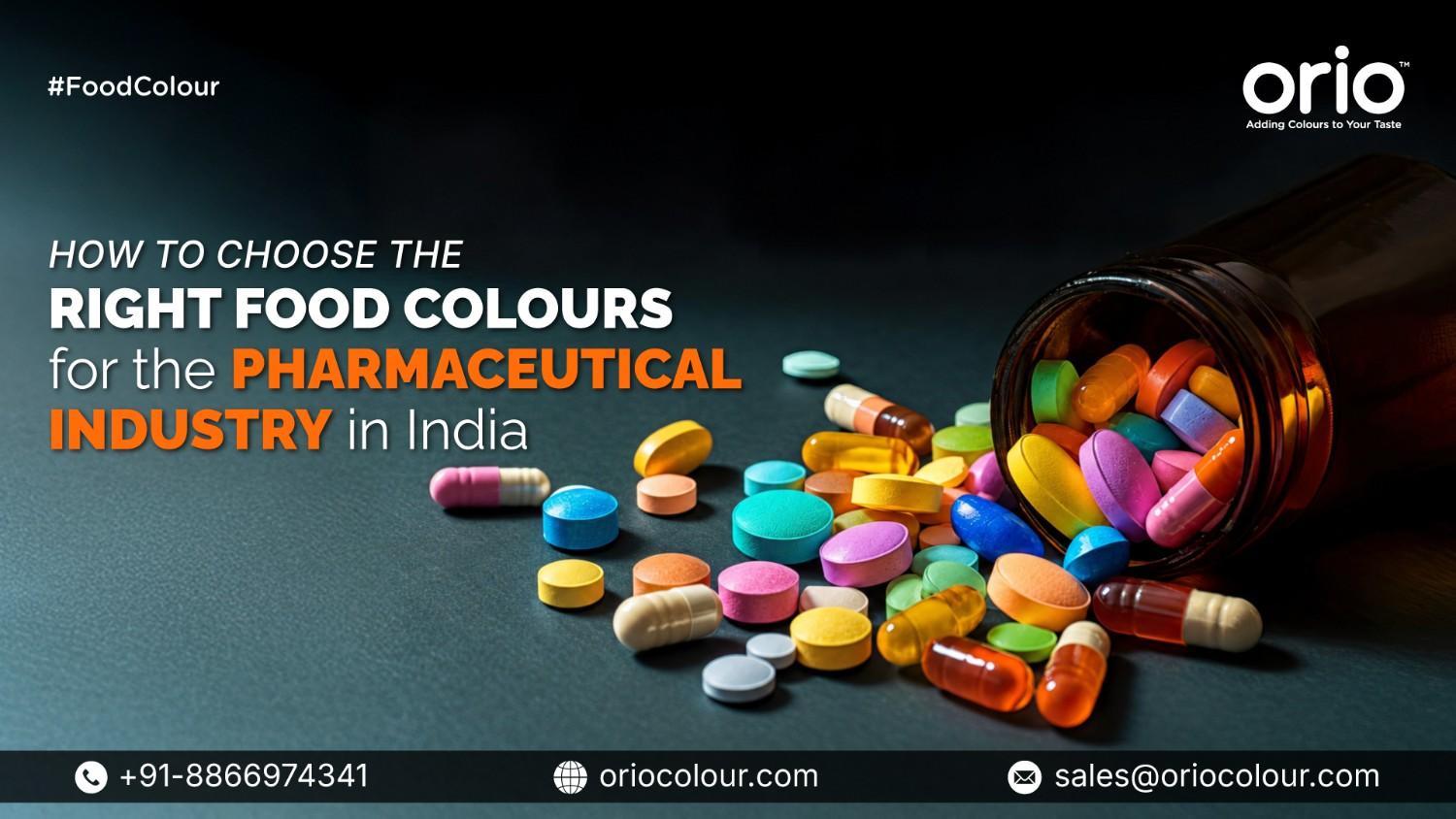
Choosing the right food colours for the pharmaceutical industry in India requires careful evaluation of regulatory compliance, formulation compatibility, colour stability, and product safety. Pharmaceutical food colours must deliver consistent appearance, batch-to-batch uniformity, and performance across tablets, capsules, syrups, and nutraceutical formulations while meeting industry quality standards.
In the pharmaceutical industry, colour is far more than a visual element. It plays a critical role in product identification, brand recognition, patient compliance, and manufacturing consistency. Whether it is a tablet, capsule, syrup, chewable supplement, or nutraceutical product, selecting the right colour requires careful consideration of regulatory standards, formulation compatibility, and long-term stability.
For pharmaceutical manufacturers, understanding how to choose pharmaceutical food colours is essential for ensuring both product quality and regulatory compliance.
Why Food Colours Matter in Pharmaceutical Products
Colour helps pharmaceutical products achieve several important objectives:
- Differentiate product strengths and formulations
- Improve product identification and reduce dispensing errors
- Enhance patient acceptance, especially for paediatric and nutraceutical products
- Support brand consistency across product lines
- Create a professional and recognisable product appearance
As demand for visually appealing and compliant pharmaceutical products grows, manufacturers are increasingly seeking reliable food colours for pharmaceutical industry applications.
What Food Colours Are Used in Pharmaceuticals?
One of the most common questions manufacturers ask is what food colours are used in pharmaceuticals.
The pharmaceutical sector typically uses:
Synthetic Food Colours:
These colours offer excellent brightness, stability, and batch-to-batch consistency. They are commonly used in:
- Tablets
- Capsules
- Syrups
- Oral suspensions
- Nutraceutical products
Lake Colours:
Lake colours are oil-dispersible pigments designed for applications where water-soluble colours may not be suitable.
Common applications include:
- Tablet coatings
- Hard and soft gel capsules
- Chewable formulations
- Cosmetic-pharmaceutical products
Natural Colours:
Growing consumer preference for naturally derived ingredients has increased interest in natural colour solutions for selected pharmaceutical and nutraceutical applications.
The choice depends on formulation requirements, processing conditions, target market regulations, and product positioning.
Why Food Colour Compliance Matters in Pharmaceuticals
Understanding why food colour compliance matters in pharmaceuticals is essential for every manufacturer.
Unlike general food applications, pharmaceutical products must meet strict quality and safety requirements. Colour additives used in medicines and nutraceutical products must comply with applicable regulatory standards and quality specifications.
Suppliers and color solutions should be assessed by manufacturers using:
- Compliance with FDA requirements for applicable markets
- Alignment with FSSAI regulations in India
- ISO 22000-certified quality management systems
- Good Manufacturing Practices (GMP)
- Halal and Kosher certifications for wider market acceptance
- Complete documentation and traceability support
Selecting compliant colour solutions helps minimise regulatory risks, maintain product quality, and support successful market approvals.
Key Factors to Consider When Choosing Pharmaceutical Food Colours
1. Regulatory Acceptance
The selected colour should be approved for the intended pharmaceutical application and target market.
Different countries may have varying regulations regarding colour usage, making supplier expertise particularly valuable.
2. Stability Under Processing Conditions
Pharmaceutical formulations may be exposed to:
- Heat
- Light
- Moisture
- pH variations
- Extended shelf-life requirements
Colours should maintain their intended appearance throughout the product lifecycle.
3. Batch-to-Batch Consistency
Colour variation can affect brand perception and quality assurance processes.
Reliable pharmaceutical food colour manufacturers India focus heavily on maintaining consistent colour strength and shade matching across production batches.
4. Application Compatibility
Different pharmaceutical dosage forms require different colour technologies. Choosing the right colour depends on how the product is formulated, processed, and consumed.
For example:
- Syrups and oral suspensions typically use water-soluble colours for uniform dispersion.
- Tablets often use synthetic colours or lake colours to achieve consistent appearance and coating performance.
- Hard and soft gel capsules commonly utilise lake colours and specialised pigments for better stability.
- Nutraceutical gummies and chewable products may use synthetic, blended, or natural colours depending on formulation goals and market preferences.
Working with an experienced food colour manufacturer for pharmaceuticals ensures that the selected colour performs effectively within the intended dosage form while maintaining visual consistency throughout the product's shelf life.
5. Supplier Expertise
An experienced food colour manufacturer for pharmaceuticals should provide:
- Technical guidance
- Shade customisation
- Regulatory documentation
- Quality assurance support
- Consistent supply capabilities
These factors are especially important when sourcing pharmaceutical food colours India for large-scale manufacturing operations.
Choosing the Right Pharmaceutical Colour Partner
The pharmaceutical sector requires more than just a colour supplier. Manufacturers need a partner who can comprehend market expectations, compliance requirements, and formulation issues.
When evaluating a pharma food colour supplier India, consider:
- Industry experience
- Product portfolio diversity
- Custom shade development capabilities
- International certifications
- Technical support services
- Quality control systems
Working with established pharmaceutical food colour manufacturers India can help streamline product development while maintaining compliance and consistency. Orio Colours offers food-grade colour solutions designed to support the evolving requirements of pharmaceutical and nutraceutical manufacturers.
Conclusion
Choosing pharmaceutical colours involves balancing aesthetics, compliance, functionality, and manufacturing performance. From regulatory acceptance and stability to batch consistency and application suitability, every factor contributes to the success of the final product.
For pharmaceutical and nutraceutical manufacturers, selecting the right colour partner can simplify formulation challenges while supporting product quality and market confidence.
At Orio Colours, we combine innovation, compliance, and custom colour expertise to deliver tailored solutions for pharmaceutical applications. Backed by international certifications and a commitment to quality, we help manufacturers achieve excellence in every shade.
FAQs:
What food colours are approved for pharmaceutical use in India?
Approved pharmaceutical colours depend on applicable regulations and intended usage. Manufacturers should work with suppliers that provide colours compliant with relevant Indian and international standards.
What are pharmaceutical food colours?
Pharmaceutical food colours are approved colouring agents used in tablets, capsules, syrups, and nutraceutical products to improve product identification, appearance, and brand consistency.
How do manufacturers choose safe pharmaceutical food colours?
Manufacturers evaluate regulatory compliance, stability, purity, application compatibility, supplier certifications, and quality assurance systems before selecting colours.
Why is colour consistency important in pharmaceutical production?
Consistent colour helps maintain brand identity, supports quality control processes, improves product recognition, and ensures uniformity across production batches.
Can food colours affect pharmaceutical product stability?
Yes. Colour performance can be influenced by heat, light, moisture, and formulation conditions. Selecting colours with appropriate stability characteristics is essential for maintaining product quality throughout shelf life.
Why do choose Orio Colours for pharmaceutical food colours?
Orio Colours offers customised shade solutions, stringent quality standards, international certifications, and application-specific expertise for pharmaceutical and nutraceutical manufacturers. With a strong focus on compliance, consistency, and innovation, Orio delivers colour solutions designed to meet evolving industry requirements.