
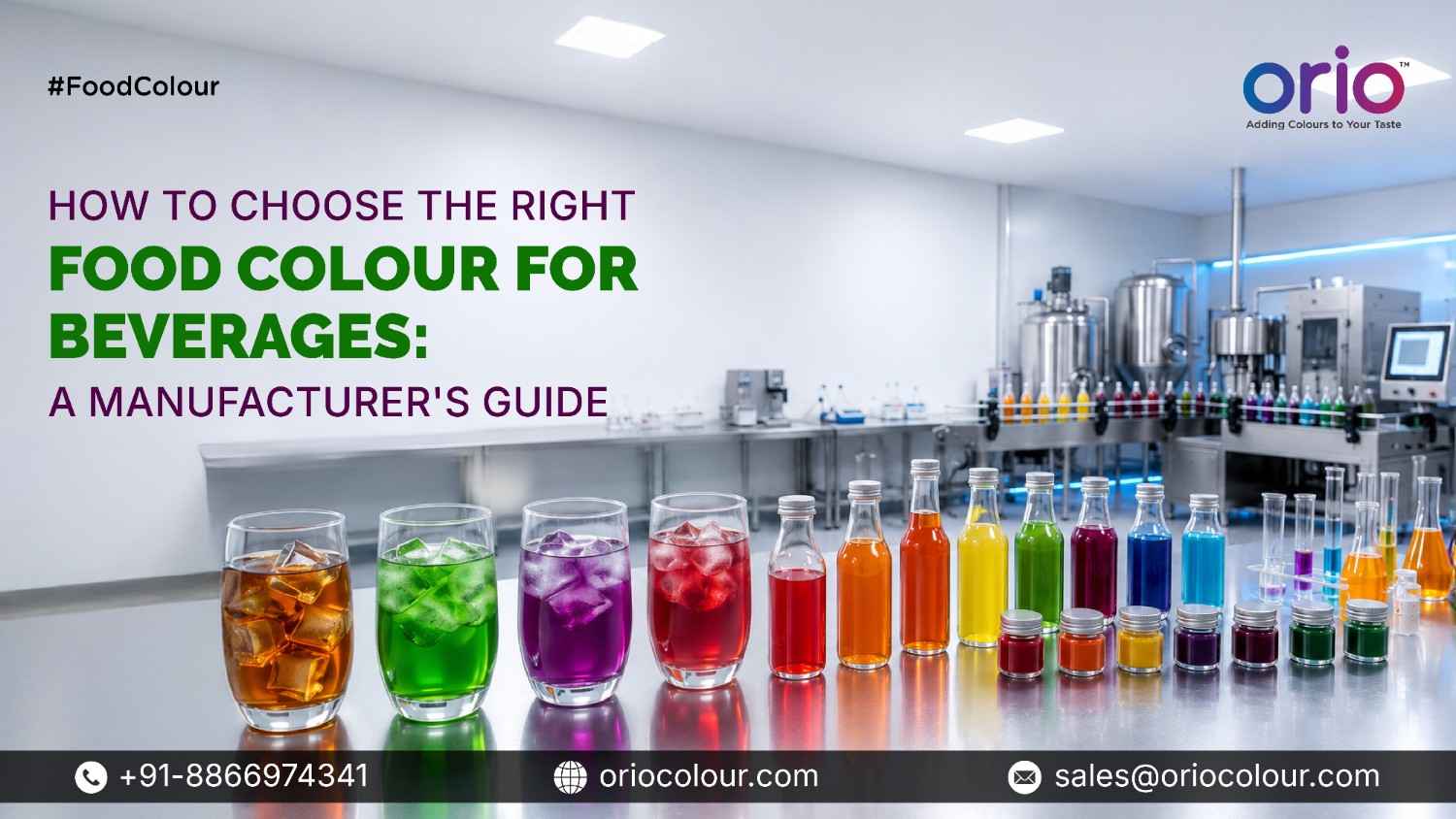
In the beverage industry, colour is often the first attribute consumers notice. Before tasting a soft drink, juice, energy drink, or flavoured beverage, consumers form expectations based on its appearance. A vibrant orange suggests citrus freshness, a deep red signals berry flavours, and a bright yellow hints at tropical fruit notes. For manufacturers, colour selection goes beyond aesthetics. The right colour solution must deliver stability, consistency, regulatory compliance, and brand differentiation. This guide explores how to choose food colours for beverages and the key factors that influence successful beverage formulation.
Why Colour Matters in Beverage Products
Colour plays a significant role in shaping consumer perception and purchasing decisions.
The right food colours for beverages help manufacturers:
- Enhance flavour recognition
- Improve shelf appeal
- Create product differentiation
- Strengthen brand identity
- Maintain visual consistency across product ranges
As competition within the beverage sector increases, colour has become an essential element of product development and market positioning.
Types of Beverage Food Colours
When evaluating beverage food colours, manufacturers can choose from several colour categories depending on formulation requirements and market objectives.
Synthetic Food Colours:
Synthetic colours remain widely used due to their:
- High colour intensity
- Excellent stability
- Consistent performance
- Broad shade availability
They are commonly used in:
- Carbonated soft drinks
- Energy drinks
- Flavoured beverages
- Syrups and concentrates
Natural Colour Solutions:
Natural colours are increasingly considered for selected beverage applications where consumer preferences favour naturally derived ingredients.
Their suitability depends on formulation conditions, shelf-life requirements, and processing methods.
Custom Shade Solutions:
Many beverage brands require unique colours that align with brand identity and product positioning.
Custom shade development allows manufacturers to create distinctive appearances that support product recognition and market differentiation.
How to Choose Food Colours for Beverages
Understanding how to choose food colours for beverages involves evaluating several technical and commercial factors.
Consider Beverage Type:
Different beverages have different formulation challenges.
For example:
- Food colours for soft drinks often require excellent clarity and stability in acidic formulations.
- Food colours for juices must perform effectively alongside fruit ingredients and varying pH levels.
- Food colours for energy drinks frequently need strong colour intensity and long-term shelf stability.
- Food colours for flavoured beverages may require customised shades that reinforce flavour expectations.
The selected colour should complement both the formulation and the intended consumer experience.
Evaluate Colour Stability:
One of the most important aspects of beverage colour selection is stability.
Colours may be exposed to:
- Light
- Temperature fluctuations
- Acidity
- Processing conditions
- Extended storage periods
A reliable colour solution should maintain its appearance throughout the product lifecycle without fading or significant shade variation.
Align Colour with Consumer Expectations:
Consumers often associate specific colours with particular flavours.
Examples include:
- Orange for citrus beverages
- Yellow for tropical fruit drinks
- Red for berry-based products
- Green for lime or mint flavours
Matching colour to flavour expectations helps create a more intuitive and appealing product experience.
Beverage Colour Selection Guide: What Manufacturers Should Consider
An effective beverage colour selection guide should include the following considerations:
Regulatory Compliance:
Food colours should comply with applicable regulatory requirements and market standards.
Manufacturers should work with suppliers that support:
- FSSAI compliance
- FDA requirements where applicable
- ISO 22000-certified systems
- GMP practices
- Halal and Kosher certifications
Batch-to-Batch Consistency:
Colour variation can affect brand perception and product quality.
Consistent colour performance across production batches helps maintain consumer trust and strengthens brand identity.
Technical Support:
An experienced beverage food colour supplier should provide guidance on:
- Shade selection
- Application suitability
- Stability requirements
- Regulatory documentation
- Product development support
Choosing the Right Beverage Food Colour Supplier
The success of beverage products depends not only on the colour itself but also on the expertise of the supplier.
When evaluating a beverage food colour supplier, manufacturers should look for:
- Extensive colour portfolio
- Custom shade capabilities
- Quality assurance systems
- Regulatory expertise
- Reliable supply consistency
- Industry-specific technical support
These capabilities help manufacturers streamline product development and maintain product quality.
Conclusion
Selecting the right colour solution requires balancing aesthetics, performance, compliance, and consumer expectations. Whether developing food colours for soft drinks, food colours for juices, food colours for energy drinks, or food colours for flavoured beverages, manufacturers benefit from choosing solutions tailored to their specific formulation needs.
At Orio Colours, we combine quality, innovation, compliance, and custom shade expertise to deliver reliable colour solutions for the modern beverage industry. Guided by our commitment to Excellence in Every Shade, we help beverage manufacturers create products that stand out in competitive markets.
FAQs
Q: How do manufacturers choose the right food colour for beverages?
A: Manufacturers evaluate beverage type, formulation characteristics, colour stability, regulatory requirements, flavour alignment, and supplier expertise before selecting a colour solution.
Q: What types of food colours are used in beverages?
A: Beverages commonly use synthetic colours, natural colours, blended colours, and custom-developed shades depending on application requirements and market preferences.
Q: Why is colour important in beverage products?
A: Colour influences consumer perception, supports flavour recognition, strengthens brand identity, and enhances product appeal on retail shelves.
Q: What factors affect food colour stability in beverages?
A: Factors include pH levels, light exposure, temperature fluctuations, processing conditions, ingredient interactions, and storage duration.
Q: Which beverages commonly use food colours?
A: Food colours are widely used in soft drinks, fruit beverages, juices, flavoured waters, energy drinks, sports drinks, syrups, and speciality beverage products.
Q: What should manufacturers look for in a food colour supplier?
A: Manufacturers should consider product quality, regulatory compliance support, technical expertise, custom shade capabilities, batch consistency, and supply reliability.
Q: Why choose Orio Colours for beverage food colour solutions?
A: Orio Colours offers customised colour development, stringent quality standards, regulatory support, and application-specific expertise. With a strong focus on innovation and consistency, Orio helps beverage manufacturers achieve excellence in every shade.