
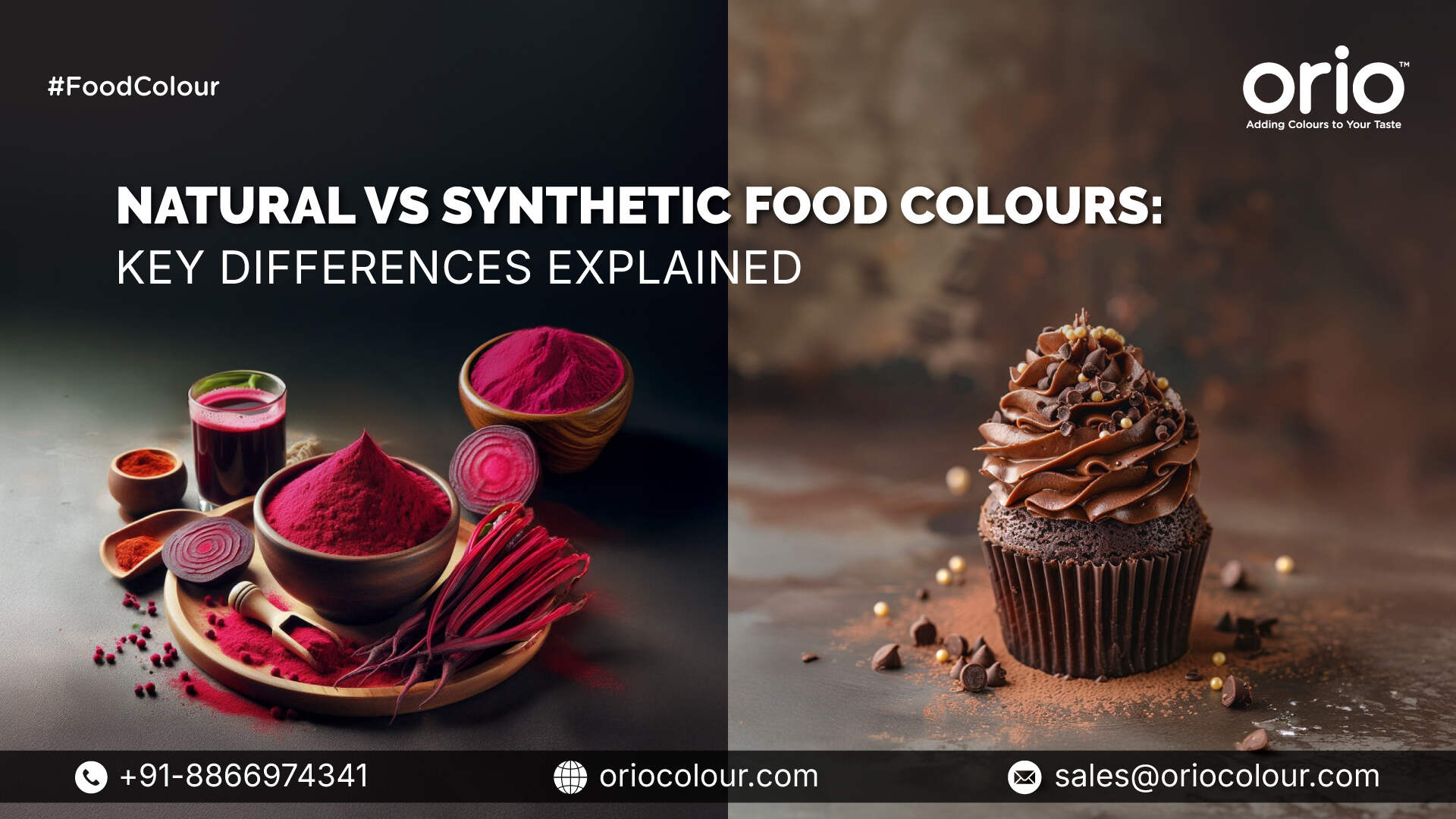
Colour influences how consumers perceive flavour, freshness, and quality long before the first bite or sip. For manufacturers across food, beverage, pharmaceutical, and nutraceutical sectors, selecting the right colouring system is not just an aesthetic decision but it affects product stability, regulatory compliance, brand positioning, and production efficiency.
As global demand for transparency grows, businesses frequently evaluate Natural vs Synthetic Food Colours to determine the best option for their formulations. Understanding the difference between natural and synthetic food colors helps manufacturers make strategic decisions that balance performance, consumer expectations, and cost.
This article explores a practical natural vs synthetic food colours comparison to help brands identify which colour system fits their product and market strategy.
Understanding Natural Food Colours
Natural food colours originate from botanical, mineral, or biological sources. Pigments derived from ingredients such as turmeric, paprika, beetroot, spirulina, and chlorophyll are commonly used to create yellow, orange, red, and green shades in food and beverages.
Many manufacturers adopt natural pigments because they align with consumer preferences for recognisable ingredients. Products positioned as organic, plant-based, or minimally processed often rely on natural colouring solutions to maintain label transparency.
Benefits of Natural Food Colours for Food Products
Natural pigments offer several advantages that make them attractive for premium or health-focused product categories:
- Consumer-friendly perception: Natural ingredients are often associated with authenticity and safety, strengthening brand trust.
- Alignment with clean-label trends: Many modern food brands prefer colouring solutions derived from plants or fruits to meet clean-label expectations.
- Sustainability positioning: Naturally sourced pigments support environmentally conscious branding strategies.
- Cultural familiarity: Colours derived from spices or vegetables often resonate with traditional cuisines and regional food products.
However, natural pigments can sometimes present formulation challenges. Their performance may vary depending on temperature, acidity, and processing methods, which requires careful application planning.
Understanding Synthetic Food Colours
Synthetic colours are manufactured through controlled chemical processes designed to deliver precise and repeatable pigment properties. These colours are widely used in processed foods, beverages, confectionery, and pharmaceutical products due to their reliable performance.
The synthetic food colours uses and applications extend across industries where colour consistency and stability are critical. Products such as flavoured drinks, candy coatings, dessert toppings, and pharmaceutical syrups rely on synthetic pigments to maintain a consistent appearance from batch to batch.
Synthetic colours remain a practical choice when manufacturers require intense shades, long shelf stability, and reliable behaviour under different processing conditions.
Key Differences Between Natural and Synthetic Food Colours
When evaluating the difference between natural and synthetic food colors, several practical factors influence the decision.
Stability During Processing
Food production often involves heating, freezing, drying, or exposure to acidic environments. Synthetic pigments are generally engineered to withstand these stresses more effectively, maintaining colour intensity throughout the product lifecycle.
Natural colours, while visually appealing, may require additional formulation adjustments to retain their shade under challenging processing conditions.
Shade Strength and Consistency
Synthetic colours provide highly concentrated pigments that deliver bright, uniform shades. This consistency is particularly valuable for large-scale manufacturing where identical visual appearance across production batches is essential.
Natural pigments usually create softer tones, which can be desirable for brands seeking a more organic visual identity.
Regulatory and Labelling Considerations
Both natural and synthetic colours must comply with regulatory standards established by authorities such as FSSAI, FDA, and other global food safety bodies. However, natural colours often support product labels that highlight the absence of artificial additives.
For manufacturers exporting globally, compliance and documentation remain equally important regardless of colour type.
Cost Comparison Natural vs Synthetic Food Colours
Another key factor for manufacturers is the cost comparison natural vs synthetic food colours.
Natural pigments typically involve agricultural sourcing, extraction, purification, and stabilization processes. These steps can increase overall production costs and lead to price fluctuations depending on crop availability.
Synthetic pigments, on the other hand, are produced through controlled manufacturing processes that allow stable supply and predictable pricing. For high-volume production environments, synthetic colours often provide a more economical solution.
However, cost decisions should always consider brand positioning. Premium food brands sometimes accept higher ingredient costs to support natural product claims.
How to Choose Food Colours for Food Brands
Selecting the right colouring solution requires a clear understanding of product goals and processing conditions. Manufacturers should evaluate several factors before finalizing their colour system.
First, consider the product category and formulation environment. Beverages with low pH levels, baked goods exposed to high heat, and dairy products with complex emulsions all demand colours suited to their specific conditions.
Second, review target market expectations. Products aimed at wellness-focused consumers may benefit from natural pigments, while large-scale FMCG products often prioritize consistency and cost efficiency.
Third, evaluate shelf life and distribution conditions. Products that travel long distances or remain on shelves for extended periods require colours that maintain stability over time.
Finally, assess brand identity and visual goals. Colour plays a key role in product recognition, making it important to choose shades that align with brand imagery and consumer expectations.
Choosing the Right Colour Strategy
The discussion around Natural vs Synthetic Food Colours is not about choosing a universally “better” option. Instead, it is about selecting the solution that fits your product’s formulation, market positioning, and operational needs.
Natural pigments offer authenticity, sustainability alignment, and consumer-friendly labelling. Synthetic colours deliver superior consistency, intense vibrancy, and cost efficiency for large-scale manufacturing.
For many manufacturers, the most effective strategy lies in evaluating both options carefully and selecting the colour system that delivers the right balance of performance, compliance, and brand value.
Partnering with experienced colour specialists can help brands navigate these decisions confidently, ensuring every product achieves the perfect visual impact while meeting global quality and safety standards.
Connect with Orio Colours for application-specific recommendations, samples, or custom shade development.
Let our experts help you create colour solutions that bring Excellence in Every Shade.