
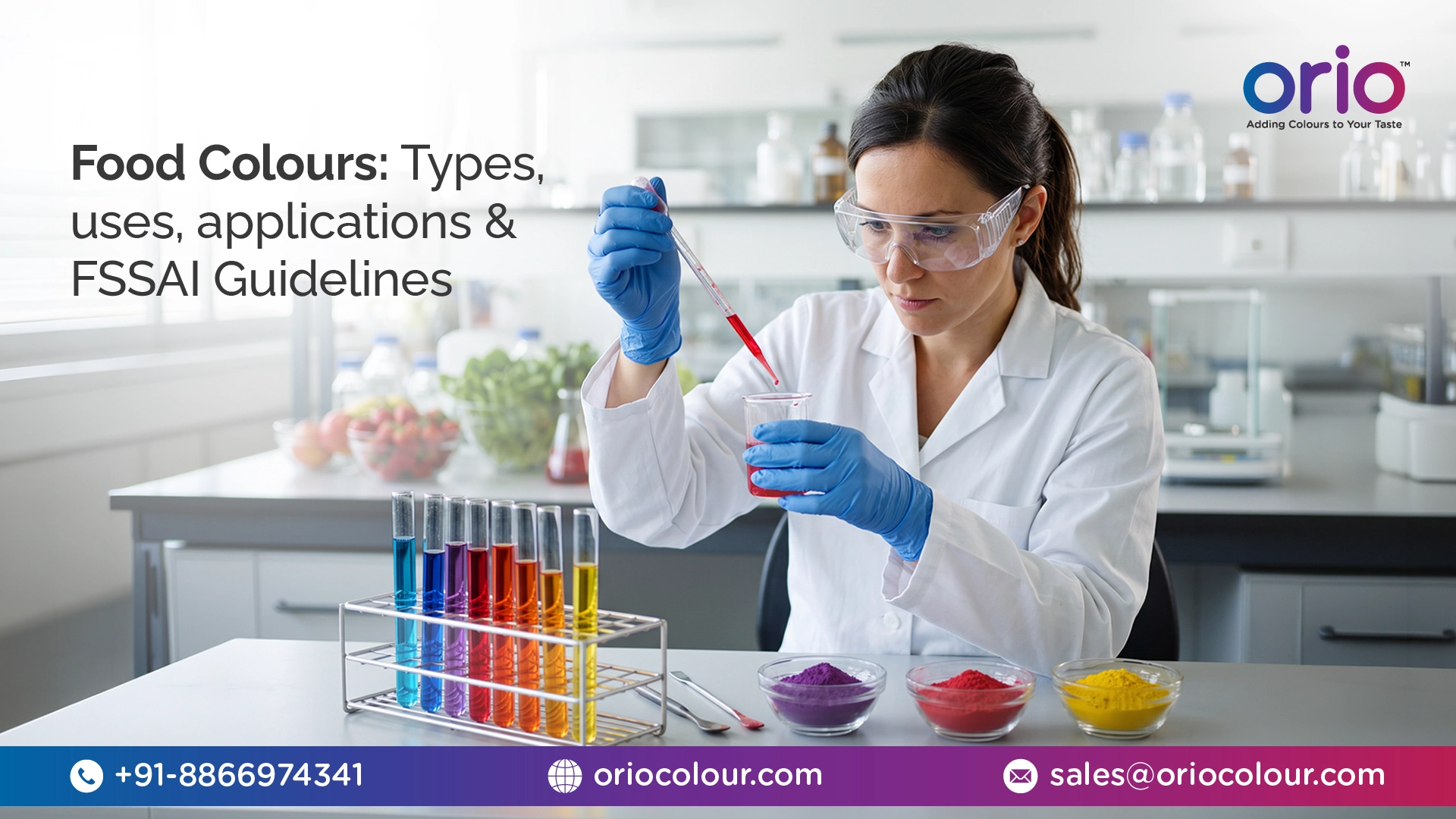
Colour decisions in food manufacturing begin long before a product reaches the packaging line. A shade that performs well in a beverage may react differently in a baked, fried or dairy-based formulation. Processing temperature, pH, ingredient interactions and storage conditions can all change how food colours appear in the finished product.
For manufacturers, the objective is therefore not simply to select an attractive food colour, but to identify a colouring solution that works within the formulation, remains suitable for the intended application and meets applicable regulatory requirements.
What Are the Main Types of Food Colours?
The types of food colours available to manufacturers vary by source, format and application characteristics. Two important categories are synthetic and natural colours.
Synthetic Food Colours:
Synthetic food colours are manufactured to provide defined shades and predictable colouring performance. Depending on the permitted application, they can be useful where manufacturers require strong colour intensity, repeatability and efficient dosage.
They are commonly evaluated for beverages, confectionery, bakery products, snacks and other processed foods. Selection should still account for processing conditions and applicable food-category regulations.
Natural Food Colours:
Natural food colours originate from recognised natural sources. Examples can include colouring ingredients based on curcumin, carotenoids, chlorophylls, anthocyanins and other permitted sources.
Their behaviour may be particularly influenced by pH, temperature, oxygen and light. Consequently, manufacturers considering natural alternatives should test the colour in the actual formulation rather than relying only on a shade reference.
Food Colour Uses Across Different Products
Different food colour uses create different technical demands. The product matrix and manufacturing process determine whether a particular colouring solution is suitable.
Common food colour applications include:
- Beverages: Colour selection may need to account for acidity, solubility and light exposure.
- Confectionery: Shade intensity and compatibility with the manufacturing process are important considerations.
- Bakery: Colours may encounter elevated temperatures during baking.
- Dairy and frozen products: The fat and protein content of the formulation can influence visual appearance.
- Snacks and seasonings: Uniform distribution across seasoning or product surfaces can be important.
- Ice creams and desserts: Colour should complement the formulation while maintaining the intended appearance through storage.
These differences explain why selecting by colour name alone can lead to inconsistent results.
What Do FSSAI Food Colour Guidelines Mean for Manufacturers?
In India, food manufacturers need to evaluate colours under the Food Safety and Standards (Food Products Standards and Food Additives) Regulations. FSSAI maintains product standards and food-additive requirements, including provisions relevant to colours.
The regulatory framework includes standards for individual food colours and colour preparations. Importantly, permitted food colours should not be interpreted as colours that can automatically be added to every food product. The relevant food category, colour, conditions of use and applicable limits need to be checked before formulation.
For manufacturers, following FSSAI food colour guidelines therefore means verifying the specific application rather than relying on a general “FSSAI approved” description from a supplier. Current food colour regulations in India should also be reviewed during product development because FSSAI regulations and amendments can change over time.
How Should Manufacturers Select a Food Colour?
A commercially workable colour needs to survive the conditions the finished product will actually encounter. Before finalising a colour, R&D and procurement teams should assess:
- Required shade and colour intensity
- Product pH and ingredient composition
- Heating, baking, frying or other processing conditions
- Solubility or dispersion requirements
- Exposure to oxygen and light
- Packaging and expected shelf life
- Applicable regulatory requirements
- Batch-to-batch colour consistency
Pilot or application trials can help reveal potential shade changes before the formulation moves into full-scale production.
Why the Right Food Colour Manufacturer Matters
A capable food colour manufacturer should help buyers move beyond selecting a shade from a catalogue. Technical discussions should consider where the colour will be used, what it will encounter during processing and what appearance the manufacturer expects at the end of shelf life.
Orio Colours supports manufacturers with application-oriented colour selection and custom shade development for different formulation requirements. This approach helps R&D teams evaluate colour in the context of the finished product while addressing quality and applicable compliance requirements.
Discuss Your Colour Application with Orio Colours
Need a colour solution for a new formulation or an existing product?
Connect with Orio Colours to discuss your target shade, application and processing requirements. The team can support colour selection and customised shade requirements with a focus on “Excellence in Every Shade.”
FAQs
Q: What are food colours?
A: Food colours are colouring substances used in permitted food applications to achieve, enhance or restore the intended appearance of a product.
Q: What are the different types of food colours?
A: Major categories include synthetic and natural food colours, with different colouring agents offering different shade and application characteristics.
Q: Where are food colours commonly used?
A: They are used across beverages, confectionery, bakery products, dairy products, frozen desserts, snacks, seasonings and other permitted food applications.
Q: Which food colours are permitted under FSSAI guidelines?
A: FSSAI regulations specify permitted colours and food-additive provisions. Permission depends on the particular colour, food category and applicable conditions or limits, so manufacturers should verify the current regulation for their specific application.
Q: What factors should manufacturers consider when selecting food colours?
A: Consider the desired shade, formulation, pH, processing temperature, solubility or dispersion, storage conditions, packaging, shelf life and regulatory requirements before commercial use.