
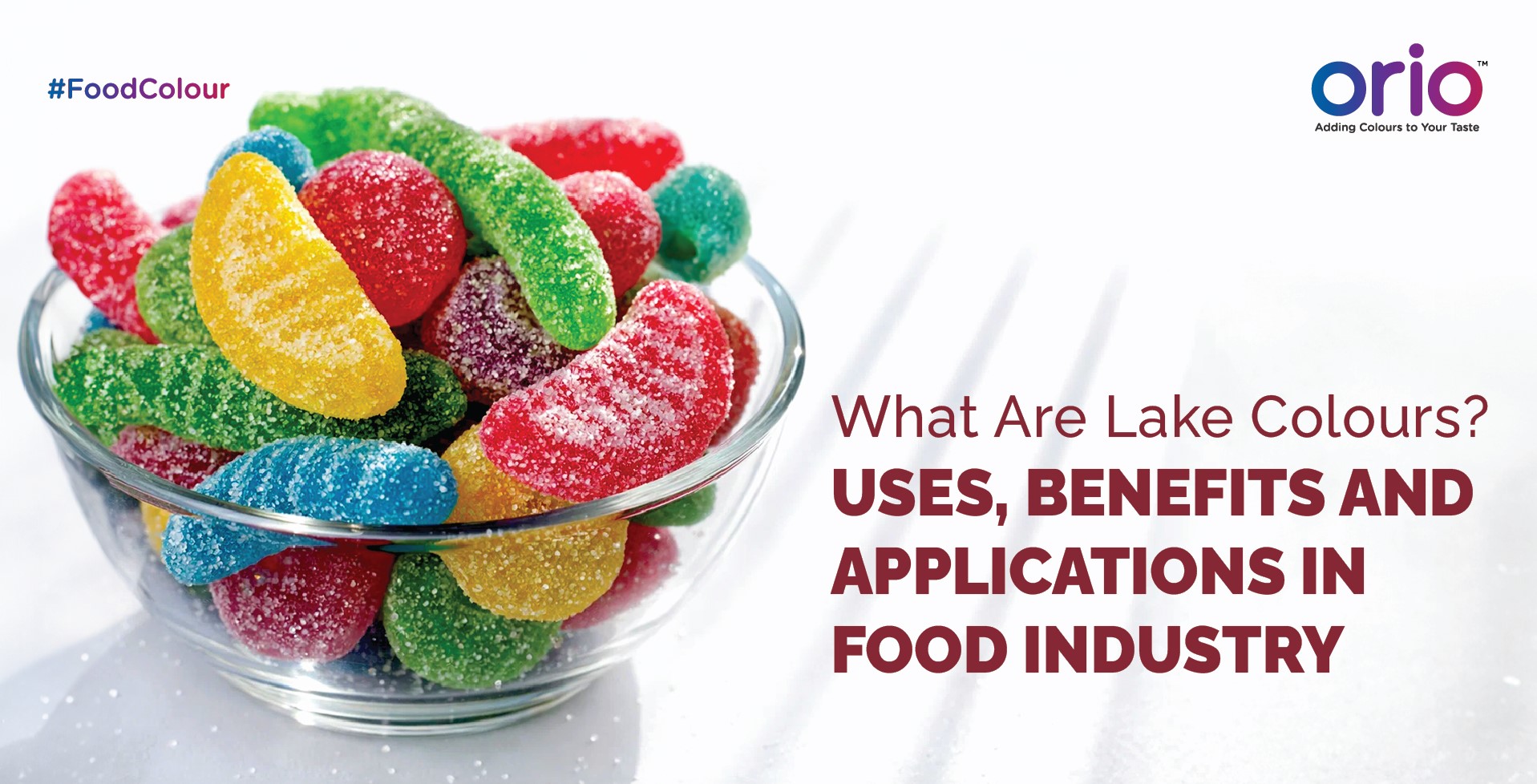
Colour consistency is critical for food brands. Whether it is a glazed donut, coated candy, bakery icing, or flavoured snack seasoning, manufacturers require colour solutions that remain stable through mixing, baking, coating, and storage. In many such applications, water-soluble colours alone are not enough. This is where lake colours in the food industry play an important role.
Understanding what are lake colours and how they function helps manufacturers choose pigments that deliver vibrant shades while maintaining product stability. These colours are widely used across bakery, confectionery, snacks, and processed foods where moisture control and colour retention are essential.
This article explores the lake food colours uses, their advantages, and the growing industrial use of lake colours across modern food manufacturing.
What Are Lake Colours?
Lake colours are pigments created by converting water-soluble dyes into insoluble forms. This process typically involves binding the dye with an inert substrate such as aluminum hydroxide. The result is a stable pigment that does not dissolve in water but disperses evenly in oil, fat, or dry formulations.
Because of this property, lake pigments behave differently from standard soluble food colours. Instead of dissolving into the product base, they remain suspended, allowing manufacturers to achieve uniform colouring in applications where moisture is minimal or fat content is high.
For food producers working with coatings, powdered mixes, or fat-based systems, lake colours offer a practical solution for maintaining visual consistency throughout processing and shelf life.
Why Lake Colours Are Important in Food Manufacturing
Many food formulations involve environments where water-soluble colours may bleed, migrate, or lose intensity. In such cases, lake pigments offer better control over colour stability.
Manufacturers rely on lake colours in food industry applications when they need pigments that remain stable during:
- high-temperature baking
- dry seasoning processes
- oil-based formulations
- chocolate or confectionery coatings
- decorative food applications
Because lake pigments are insoluble, they maintain colour definition and prevent unwanted spreading within the product.
Lake Food Colours Uses Across Food Categories
The lake food colours uses extend across multiple segments of the food sector where stable colouring is required.
Confectionery and Coated Candies
Candy coatings often require bright colours that remain vibrant without dissolving during storage. Lake pigments provide strong colour intensity for sugar-coated candies, chewing gums, and hard confectionery.
Snack Seasonings
Many snack products use dry seasoning blends. Lake colours disperse well in powdered formulations, helping manufacturers achieve uniform colour distribution in chips, savory snacks, and seasoning mixes.
Chocolate and Fat-Based Products
Because lake colours are oil dispersible, they perform effectively in chocolate coatings, compound coatings, and fat-rich confectionery products where water-soluble dyes would not function properly.
Decorative Food Applications
Lake pigments are commonly used for product decorations such as sprinkles, coloured sugar crystals, and coating layers where colour stability and non-bleeding properties are required.
Lake Colours for Bakery Products
One of the most important areas for lake colours for bakery products is decorative bakery items.
Bakery manufacturers frequently work with fat-rich formulations, icing systems, and surface decorations. In such applications, lake colours provide several advantages:
- Consistent colour appearance in icings and frostings
- Stability during baking and post-bake decoration
- Controlled dispersion in fat-based fillings
- Reduced colour bleeding in layered bakery products
These characteristics make lake pigments ideal for cupcakes, donuts, cookies, pastries, and bakery toppings.
Benefits of Lake Food Colours
Understanding the benefits of lake food colours helps manufacturers determine when they are the best choice for product development.
Superior Stability in Low-Moisture Systems
Lake pigments perform particularly well in products where water activity is low. Their insoluble nature prevents colour migration or dilution.
Better Colour Retention
Because they do not dissolve in the product base, lake colours maintain their shade intensity throughout processing and storage.
Suitable for Oil and Fat-Based Applications
Lake pigments disperse efficiently in oils and fats, making them suitable for coatings, chocolate, and bakery creams.
Improved Colour Control
Manufacturers gain better control over pigment concentration and distribution, ensuring consistent visual appearance across batches.
Versatile Industrial Applications
The industrial use of lake colours spans confectionery, snacks, bakery, processed foods, and decorative food ingredients.
Applications of Lake Colours in Modern Food Production
The applications of lake colours continue to expand as manufacturers develop more visually distinctive products. Today, lake pigments are commonly used in:
- coated confectionery and sugar shells
- bakery toppings and icing decorations
- snack seasoning blends
- chocolate and compound coatings
- powdered beverage mixes
- decorative sprinkles and sugar crystals
Their ability to remain stable in low-moisture or fat-based systems makes them a preferred colouring solution in many industrial formulations.
Choosing the Right Colour Solution for Your Product
While lake pigments offer clear advantages in many applications, selecting the right colouring system depends on the product formulation, processing environment, and desired visual effect.
Manufacturers should evaluate factors such as moisture content, fat composition, processing temperature, and shelf-life requirements when choosing between soluble colours and lake pigments. In many cases, working with experienced colour specialists helps ensure that the selected pigment delivers optimal performance and regulatory compliance.
Bringing Colour Precision to Food Innovation
As product presentation continues to influence consumer purchasing decisions, colour stability becomes an essential part of food innovation. Lake pigments offer manufacturers a reliable solution for achieving vibrant, stable shades in complex food formulations.
At Orio Colours, colour solutions are developed with a focus on performance, compliance, and application expertise. From bakery and confectionery to snacks and processed foods, the goal is to help manufacturers achieve the perfect shade with confidence.
Connect with Orio Colours to explore custom colour solutions designed to deliver Excellence in Every Shade.